Rion has implemented a series of automation projects aimed at reducing dependency on manual labor at a time when recruitment processes are becoming increasingly challenging and prolonged. The company continuously identifies production bottlenecks and optimizes manufacturing processes to improve efficiency and competitiveness
In today’s challenging recruitment processes and increasingly competitive industrial landscape, Rion’s Organization & Methods Department continues to push the company toward the forefront of manufacturing innovation. Through smart automation solutions, Rion is enhancing production accuracy, maintaining the highest quality standards, and overcoming workforce shortages while strengthening its competitive edge.
A Culture of Excellence: The Foundation Behind Today’s Automation Success
Rion’s ability to lead complex automation initiatives did not happen overnight. It is the result of years of cultivating an organizational culture that views operational efficiency as a core value.
Long before automation became an integral part of the production floor, the Organization & Methods Department invested heavily in optimizing the company’s manufacturing infrastructure. Over the years, Rion has carried out numerous projects that transformed its production capabilities – from implementing advanced injection molding technologies that reduce waste and improve product precision, to redesigning workflows that minimize unnecessary movement, and continuously upgrading production molds to shorten cycle times.
Many of these initiatives required the reengineering of highly complex manufacturing processes. Each project concluded with in-depth analysis and lessons learned, creating a strong foundation for future improvements. These ongoing learning processes gave Rion’s engineering and automation teams the confidence and expertise to tackle challenges that once seemed impossible, helping transform the factory into a smarter, more agile, and globally competitive manufacturing operation.
Solving Workforce Challenges Through Automation
“The main driver behind our push toward automation is not just cost reduction, it’s the very real challenge of recruiting and retaining employees,” explains Omer Ben David, Head of Organization & Methods at Rion. “We identify stations where operators are tied to machines performing repetitive tasks and replace those activities with automation solutions, allowing employees to focus on more skilled and value-added work.”
From Persistence to Success: The Adapters Project
One of the department’s most ambitious projects emerged from a desire to solve a challenge that had previously been considered too complex to automate.
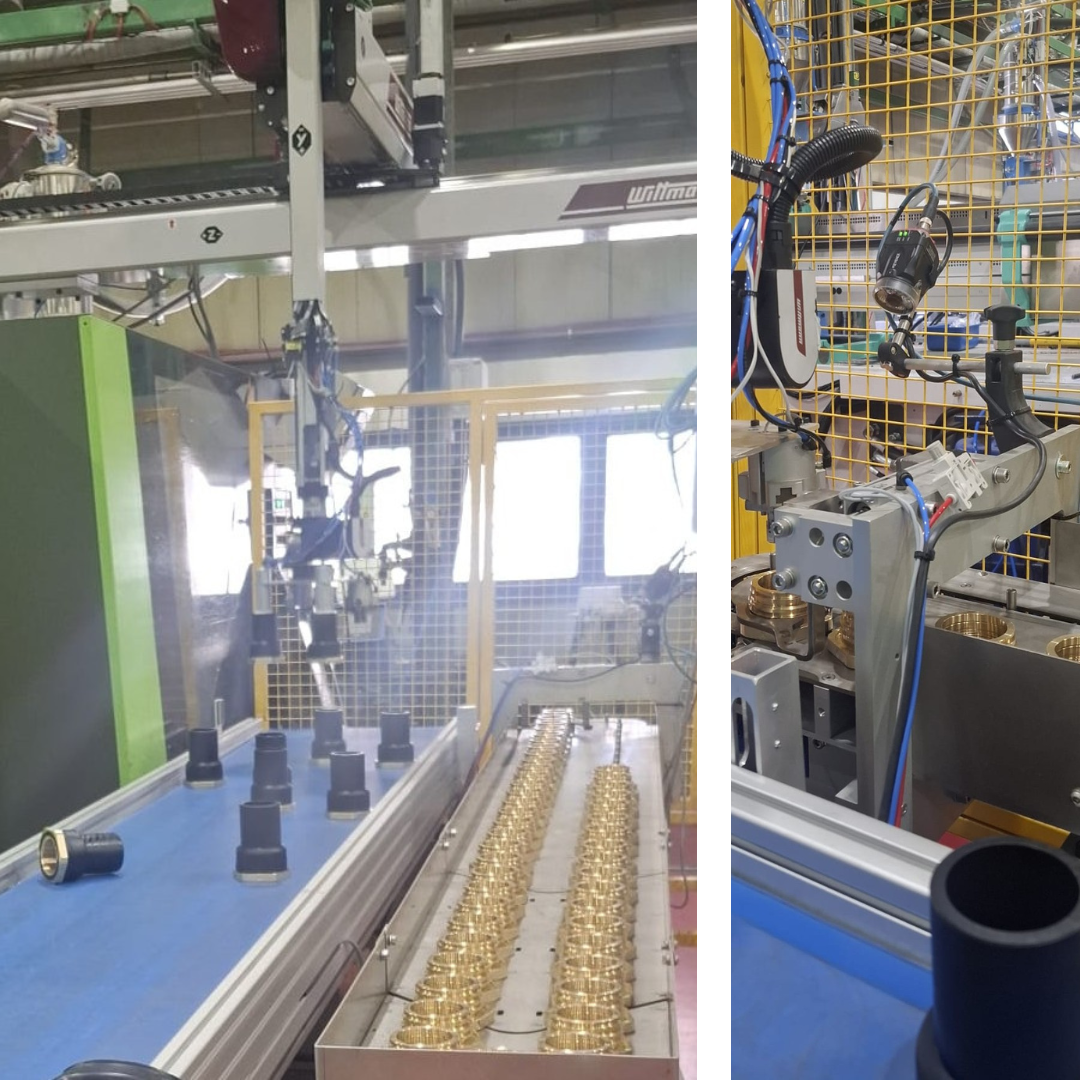
The project involved an injection molding machine used to overmold plastic onto brass fittings. In the past, automating the process was viewed as impractical — but the team refused to give up.
“As we analyzed the process in depth, we realized we needed to build an entirely new setup, including redesigned molds,” says Omer. “The system also incorporates a five-axis Cartesian robot. The brass inserts are transported on a conveyor equipped with a vision camera. Once the camera verifies that the component meets quality requirements, the robot picks up two brass inserts and positions them inside the mold for plastic injection. After molding is completed, the robot removes the finished parts and places them onto a second conveyor.”
Itay Gover, Automation Department Manager, adds: “The technical challenge was significant, but once the mold was fully synchronized with the automation software we developed at Rion, the entire system began operating continuously and fully automatically across a wide range of fitting sizes.”
The Regulator Line: Eliminating Production Bottlenecks
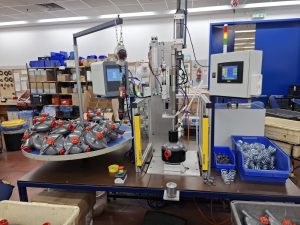
Another key automation initiative focused on Plasson’s regulator production line, where the goal was to reduce reliance on three operators performing manual tasks.
“We introduced a high-speed automatic screwdriver system, but the real challenge was the drilling process,” says Omer.
Here, close collaboration between the Organization & Methods and Automation departments proved critical. After an extensive testing phase, the teams developed a new operating methodology that included updated tolerances and a standardized drill replacement procedure. The results were immediate: manpower requirements were reduced from three operators to two, while production output increased.
Looking Ahead
The return on investment from these automation projects continues to validate Rion’s long-term commitment to technological advancement. As Itay Gover explains, the team is already focused on its next challenge: an insert molding automation project for Bermad, designed to further eliminate manual operations from the production floor.
For Rion, the combination of deep engineering expertise and technological innovation remains the key to building resilient, efficient manufacturing processes – and to maintaining its position at the forefront of the industry.